
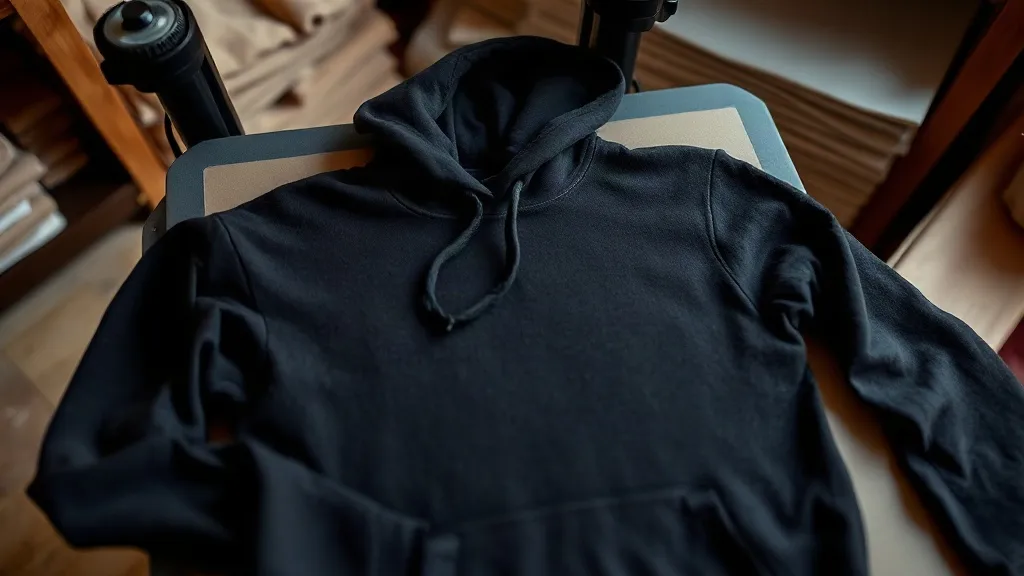
Most streetwear labels do not fail because the design was weak. They fail because the print did not survive the second wash, or because the per-unit cost quietly ate the margin on a 50-piece drop. DTF transfers have become the default answer for small and mid-size brands for exactly this reason: they let you print full-color artwork on almost any blank without screen setup fees, and they hold up well when the process behind them is right. This guide is about the details that separate a transfer that lasts from one that peels, cracks, or looks flat on a heavyweight hoodie.
Why DTF Fits the Streetwear Production Model
Streetwear runs on drops. You release a small run, see what sells, then reorder the winners. That rhythm is brutal for screen printing, where every color adds a screen, every screen adds a setup charge, and a 30-piece run of a five-color design can price itself out of existence before you sell a single unit.
DTF flips that math. The artwork is printed onto a film, powdered with adhesive, and cured. There is no screen, no color count penalty, and no minimum that forces you into 200 units to get a sane price. A gradient, a photo, a hand-drawn illustration with twelve colors: all of it costs the same as a one-color logo. For a brand testing five designs at once, that flexibility is the whole game.
The trade-off is that DTF is a process-sensitive product. The film, the powder, the press temperature, and the fabric underneath all interact. Get those right and the print feels integrated into the garment. Get them wrong and you get a plastic patch that cracks along the edges after a few cycles in the laundry.
Matching Transfers to Streetwear Blanks
Not every blank takes a transfer the same way. The variables that matter most are fiber content, surface texture, and how much the fabric has been pre-shrunk.
Cotton and Cotton-Rich Blends
Heavyweight cotton jersey and fleece are the friendliest surfaces for DTF. The adhesive bonds cleanly to cotton fibers, and the print sits on top rather than sinking in. On a 100% cotton tee, expect a soft hand feel and strong wash durability. On cotton-poly blends, results are still good, but the poly content can change how the print looks after repeated washing, sometimes lightening slightly over time. Test your specific blank before committing to a full run.
Polyester and Performance Fabrics
High-polyester garments are where DTF needs more care. Heat can cause the fabric to shrink or glaze, and the print may bond less aggressively. Lower the press temperature, extend the dwell time slightly, and always use a cover sheet. If you are printing on performance mesh or a coated polyester, run a wash test on a single sample first. This is not a reason to avoid poly, it is a reason to slow down for one test piece.
Textured and Fleece Surfaces
Fleece, French terry, and heavy brushed fabrics have a raised surface that can prevent full contact between the transfer and the fibers. The fix is pressure and a firm, flat platen. Pre-press the garment for a few seconds to flatten the nap, then apply the transfer with even, consistent pressure. Skipping the pre-press is one of the most common causes of edge lifting on hoodies.
The Press Settings That Actually Matter
Every transfer supplier publishes a recommended temperature and time, and those numbers are a starting point, not a law. What matters is that you control four things consistently:
- Temperature: Too hot scorches the film and glazes synthetics; too cool leaves the adhesive under-cured and prone to peeling.
- Pressure: Medium to firm, applied evenly. A weak spot in pressure becomes a weak spot in the bond.
- Time: Follow the supplier spec, then verify with a peel test once the garment is completely cool.
- Cooling: Let the print cool fully before you peel the film. Peeling warm is how you get stretched, distorted edges.
Keep a simple log for each blank you use: temperature, time, pressure setting, and the result after one wash. After a handful of runs you will have a reliable reference that saves you from re-testing every batch.
Durability: What to Expect and How to Improve It
A properly applied DTF transfer on a compatible blank should survive dozens of wash cycles without cracking or lifting. The failures people report usually trace back to three causes: under-curing, pressing on a fabric that was not pre-treated, or washing inside out at high heat.
You can extend the life of every print by adding simple care instructions to your product pages and packaging. Turn the garment inside out, wash cold, skip the fabric softener, and tumble dry low or hang dry. Customers who follow those steps get dramatically better results, and better results mean fewer returns and better reviews. That is worth a small insert card in every order.
Pricing Math for Small Batches
The reason DTF works for indie brands is not just the low setup cost, it is the way it scales down. A 25-piece run of a full-color design is viable. A 500-piece run is also viable, and the per-unit cost drops as volume rises. That means you can start small, validate the design, and reorder without changing your process or your artwork files.
When you calculate your retail price, build in the blank cost, the transfer cost, your labor time for pressing and folding, packaging, and payment fees. Many new brands forget labor and packaging, then wonder why a $35 tee feels unprofitable. Track those numbers per drop so you know which designs actually earn their place in the lineup.
Common Mistakes That Cost You Money
- Pressing without pre-pressing the garment to remove moisture and flatten the surface.
- Peeling the film while the print is still warm.
- Using one set of press settings for every fabric instead of matching settings to the blank.
- Skipping wash tests on new blanks or new transfer batches.
- Storing transfer films in humid conditions, which can affect the adhesive powder.
None of these are complicated to fix. They just require a routine, and a routine is what separates a brand that ships consistent product from one that fields complaints.
Frequently Asked Questions
How many washes do DTF transfers typically survive?
On a compatible cotton or cotton-blend blank with correct press settings, most prints hold up through dozens of wash cycles. Longevity depends heavily on cure quality and care instructions, so always verify with your own wash test rather than relying on a general claim.
Can I apply DTF transfers to dark and light garments equally well?
Yes. Unlike some processes, DTF includes a white ink layer that makes the print opaque on dark fabrics. The same transfer works on black, navy, and white garments, which simplifies your inventory and reduces the number of SKUs you need to manage.
Do I need a commercial heat press to get good results?
A quality heat press with adjustable temperature and pressure is strongly recommended. Household irons do not deliver even pressure or consistent temperature, and the inconsistency shows up as peeling edges and uneven adhesion after a few washes.
Is DTF suitable for full-color photographic artwork?
It is one of the better options for detailed, multi-color artwork because there is no color count cost. Gradients, photographs, and fine linework all reproduce well, provided the source file is high resolution and the transfer is pressed correctly.
How should I store unused transfers?
Keep films flat, dry, and away from direct heat and humidity. A sealed bag in a cool room is enough for most setups. Avoid stacking heavy items on top of films, since creases can transfer into the print.