
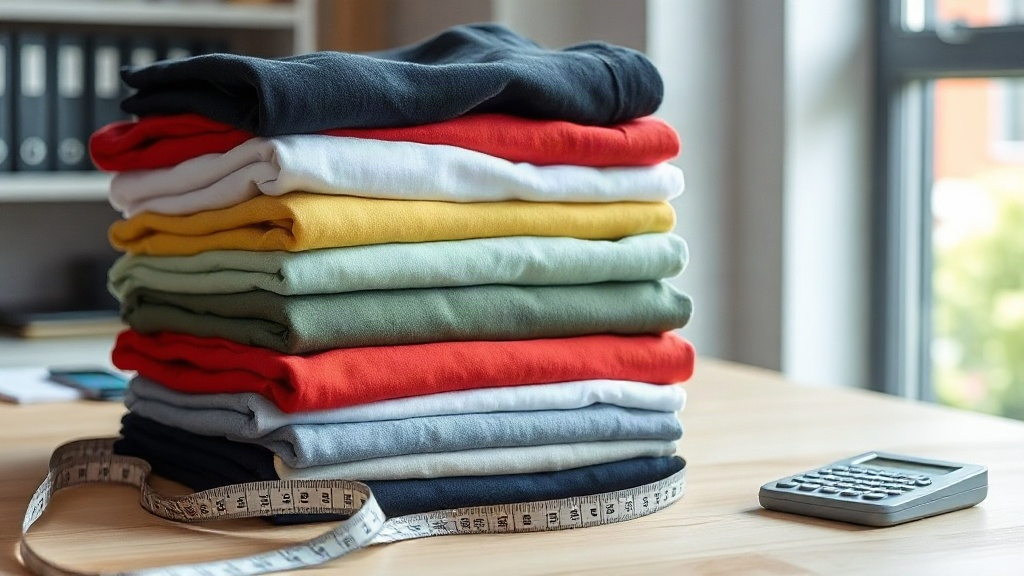
When you're sourcing custom premium t-shirts for your brand, team, or event, you've likely encountered the term CPS. It stands for cost per shirt, a critical metric that can make or break your budget. But CPS isn't just a number; it reflects the quality, sourcing, and production decisions behind every garment. In this guide, we'll unpack what CPS really means for custom premium t-shirts, how to calculate it accurately, and how to keep it low without sacrificing the premium feel your customers expect.
What Is CPS and Why Does It Matter for Custom Premium T-Shirts?
CPS, or cost per shirt, is the total cost of producing or purchasing a custom t-shirt divided by the number of shirts in your order. It includes the blank shirt, printing or embroidery, labor, and any additional services like tagging or folding. For premium t-shirts, CPS tends to be higher because the materials and construction are superior. However, understanding CPS helps you compare quotes from different suppliers and identify where you can save without cutting corners.
Why does CPS matter? Because it directly affects your profit margin if you're reselling, or your budget if you're buying for internal use. A lower CPS means more shirts for your money, but it shouldn't come at the expense of quality. Premium t-shirts are an investment in your brand image, and your CPS should reflect a balance between cost and value.
How to Calculate CPS for Your Custom T-Shirt Order
Calculating CPS is straightforward, but you need to account for all costs. Here's a step-by-step breakdown:
- Determine the total order cost: This includes the blank shirts, printing charges, setup fees, shipping, and any taxes or duties.
- Count the number of shirts: This is the total quantity you're ordering, including any spares or samples.
- Divide total cost by quantity: The result is your CPS.
For example, if you order 100 premium t-shirts at $12 each, plus $200 for printing and $50 for shipping, your total cost is $1,450. Dividing by 100 gives you a CPS of $14.50. But wait, there's more: if you add custom neck labels at $0.50 per shirt, your CPS rises to $15.00. Always factor in every cost to get an accurate CPS.
Factors That Influence CPS
Several factors can drive your CPS up or down:
- Fabric quality: Premium fabrics like organic cotton, bamboo, or tri-blends cost more than standard cotton. But they also feel better and last longer, which can justify a higher CPS.
- Printing method: Screen printing is cost-effective for large orders, while direct-to-garment (DTG) or embroidery may have higher per-unit costs. Your choice affects CPS.
- Order quantity: Larger orders typically lower CPS due to economies of scale. Setup fees are spread across more shirts.
- Additional services: Custom tags, folding, poly-bagging, and individual shipping all add to CPS.
By understanding these factors, you can make informed decisions to optimize your CPS.
Strategies to Reduce CPS Without Sacrificing Quality
Lowering your CPS doesn't mean settling for inferior shirts. Here are proven strategies to keep costs down while maintaining premium quality:
1. Order in Bulk
The most effective way to reduce CPS is to increase your order quantity. Most suppliers offer tiered pricing, so the more you order, the less you pay per shirt. If you anticipate future needs, consider ordering extra to lock in a lower CPS. Just make sure you have storage space and that the design won't become outdated.
2. Choose the Right Printing Method
For large orders with simple designs, screen printing offers the lowest CPS. For complex, full-color designs, DTG might be more economical for small batches. Embroidery is durable but can raise CPS significantly. Evaluate your design and order size to pick the method that balances quality and cost.
3. Simplify Your Design
The more colors and locations in your design, the higher your CPS. Reducing the number of print colors or using a single-color design can cut costs. Also, consider placing the design in one location (e.g., front only) instead of multiple spots.
4. Negotiate with Suppliers
Don't be afraid to ask for a better price, especially for repeat orders. Building a relationship with your supplier can lead to discounts and lower CPS over time. At Best Smart Blanks, we work with businesses to find cost-effective solutions without compromising on premium quality.
5. Avoid Unnecessary Add-Ons
Custom neck labels, hang tags, and individual poly-bagging add to CPS. If these aren't essential for your brand, skip them. However, if they enhance the unboxing experience, they might be worth the extra cost.
Balancing CPS and Premium Quality
Premium t-shirts are defined by their fabric, fit, and finish. While a lower CPS is desirable, it shouldn't come at the expense of these attributes. Customers notice the difference between a flimsy shirt and a well-made one. Investing in premium blanks ensures your brand is associated with quality, which can lead to repeat business and higher perceived value. So when you calculate CPS, consider the long-term benefits of using superior materials.
At Best Smart Blanks, we specialize in premium blanks that offer an excellent balance of quality and cost. Our shirts are made from soft, durable fabrics that take printing well and hold up wash after wash. By sourcing directly from us, you can achieve a competitive CPS without sacrificing the premium feel your customers expect.
Real-World Example: CPS in Action
Let's say you're a small business owner launching a new apparel line. You want 200 premium t-shirts with a two-color front print and a custom neck label. You get quotes from three suppliers:
- Supplier A: $10 per blank, $2 per print, $0.75 for label, $100 setup, $80 shipping. Total: $2,000 + $400 + $150 + $100 + $80 = $2,730. CPS = $13.65.
- Supplier B: $12 per blank, $1.50 per print, $0.50 for label, no setup, $100 shipping. Total: $2,400 + $300 + $100 + $0 + $100 = $2,900. CPS = $14.50.
- Supplier C: $9 per blank, $2.50 per print, $1 for label, $150 setup, $120 shipping. Total: $1,800 + $500 + $200 + $150 + $120 = $2,770. CPS = $13.85.
Supplier A offers the lowest CPS, but you should also consider the quality of the blanks. If Supplier A's shirts are not truly premium, the lower CPS might not be worth it. Always request samples to compare.
Frequently Asked Questions About CPS for Custom Premium T-Shirts
What does CPS stand for in custom t-shirt printing?
CPS stands for cost per shirt. It is the total cost of your order divided by the number of shirts, giving you the average cost per unit.
How can I lower my CPS without sacrificing quality?
You can lower your CPS by ordering in larger quantities, choosing a more cost-effective printing method, simplifying your design, negotiating with suppliers, and avoiding unnecessary add-ons. However, always prioritize quality to maintain your brand's reputation.
Does CPS include shipping and taxes?
Yes, for an accurate CPS, you should include all costs: blanks, printing, setup fees, shipping, taxes, and any additional services. This gives you the true cost per shirt.
Is a lower CPS always better?
Not necessarily. A very low CPS might indicate lower quality materials or printing. It's important to balance cost with the premium feel and durability your customers expect.
How does order quantity affect CPS?
Generally, larger order quantities result in a lower CPS because fixed costs like setup fees are spread over more shirts, and suppliers often offer volume discounts.
Final Thoughts
Understanding CPS is essential for anyone ordering custom premium t-shirts. It empowers you to make informed decisions, compare suppliers fairly, and optimize your budget. Remember that CPS is not just about the lowest number; it's about getting the best value for your investment. By focusing on quality, order size, and smart production choices, you can achieve a CPS that works for your business and your customers. At Best Smart Blanks, we're here to help you navigate the process and find the perfect premium blanks for your next project.