
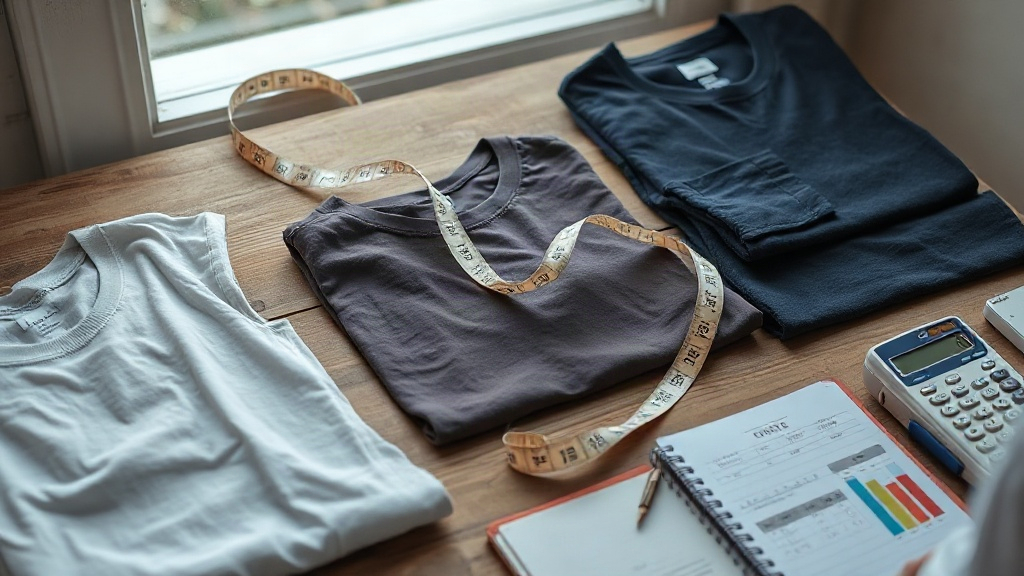
When you're sourcing custom premium shirts for your brand, team, or event, one metric often flies under the radar: CPS, or cost per shirt. It's not just a number; it's the key to understanding whether you're getting a fair deal or leaving money on the table. Whether you're ordering 50 or 500 shirts, knowing how CPS works can help you make smarter decisions, negotiate better, and ultimately deliver a product your customers or team will love. In this guide, we'll break down what CPS really means, the factors that influence it, and how you can optimize it without sacrificing the premium feel that sets your shirts apart.
What Exactly Is CPS in Custom Apparel?
CPS stands for cost per shirt. It's a straightforward calculation: take the total cost of your order (including garments, printing, setup fees, shipping, and any extras) and divide it by the number of shirts you receive. The result tells you the average price you're paying for each piece. But don't let the simplicity fool you. CPS is a powerful tool for comparing quotes, budgeting, and spotting hidden costs. For example, a supplier might quote a low unit price but tack on high screen setup fees or shipping charges. By calculating CPS, you see the full picture.
Why does this matter for premium shirts? Because premium fabrics, like organic cotton or performance blends, come at a higher base cost. Understanding CPS helps you balance that cost against your budget and your customers' expectations. If you're selling shirts, CPS directly affects your profit margin. If you're buying for a team, it affects how many you can afford. Either way, it's a metric you can't afford to ignore.
Factors That Influence CPS
Several variables can make your CPS go up or down. Let's break down the big ones.
1. Fabric and Construction
The type of fabric you choose is the biggest driver of base cost. A standard cotton tee might cost $5 to $8 per shirt, while a premium ring-spun cotton or tri-blend could be $12 to $20. Add special features like side seams, taped neck and shoulders, or eco-friendly dyes, and the price climbs. But remember: higher quality often means better durability and customer satisfaction, which can justify a higher CPS.
2. Printing Method and Colors
Screen printing is cost-effective for large orders with few colors. Each color adds a screen charge, typically $20 to $50 per color, which gets spread across the order. For small orders or complex designs, digital printing (DTG) might be better, but it has a higher per-unit cost. The more colors and locations (front, back, sleeve), the higher your CPS. Embroidery is another option, with a one-time digitizing fee and per-stitch pricing.
3. Order Quantity
This is where economies of scale kick in. Most suppliers have price breaks at 50, 100, 250, and 500 units. The more you order, the lower your CPS because fixed costs like setup and screen charges are spread over more shirts. However, don't overorder just to get a lower CPS; consider storage and whether you can actually use or sell the extras.
4. Additional Costs
Don't forget shipping, taxes, and any special services like folding, tagging, or individual poly-bagging. These can add $1 to $3 per shirt, significantly impacting your CPS. Always ask for an itemized quote so you can see where your money is going.
How to Calculate CPS Accurately
To get an accurate CPS, follow this formula:
- Add up all costs: garment cost + printing/embroidery + setup fees + shipping + taxes + any extras.
- Divide by the number of shirts in the order.
For example, if you order 100 premium shirts at $10 each, printing costs $2 per shirt, setup fees are $100 total, and shipping is $50, your total cost is $1000 + $200 + $100 + $50 = $1350. Divide by 100, and your CPS is $13.50. Compare this to another quote that seems cheaper but has hidden fees; the CPS reveals the true cost.
Strategies to Optimize CPS Without Compromising Quality
You want premium shirts without blowing your budget. Here's how to lower your CPS while keeping quality high.
Choose the Right Printing Method
For large orders with simple designs, screen printing offers the best CPS. Limit colors to 1-2 and use standard placements. For small orders or photorealistic designs, digital printing may be more cost-effective despite a higher per-unit cost because it eliminates setup fees.
Order in Bulk (But Wisely)
If you know you'll need more shirts later, ordering in larger quantities can significantly reduce CPS. But factor in storage costs and the risk of unsold inventory. For businesses, offering pre-orders or crowdfunding can help you gauge demand and order accordingly.
Negotiate with Suppliers
Don't be afraid to ask for a better price, especially for repeat orders or large volumes. Suppliers often have room to negotiate on setup fees or shipping. Mention that you're comparing CPS across vendors; it shows you're informed and serious.
Simplify Design and Placement
A single-color logo on the left chest is cheaper than a full-back, multi-color print. If you want a premium look without the cost, consider embroidery on a high-quality blank shirt. It adds a touch of class and can be more durable than printing.
Why CPS Matters for Your Brand
Your CPS directly impacts your pricing strategy. If you're selling custom shirts, you need to set a retail price that covers your CPS plus overhead and profit. Knowing your CPS helps you avoid underpricing and losing money. For team or event shirts, a lower CPS means you can provide better quality shirts within your budget, boosting satisfaction and brand image.
Moreover, understanding CPS empowers you to make informed trade-offs. Maybe you can afford a slightly higher CPS for organic cotton because your customers value sustainability. Or perhaps you'll choose a standard fabric to keep costs down for a giveaway. Either way, it's a conscious decision.
Common Pitfalls That Inflate CPS
Watch out for these traps that can unexpectedly raise your CPS.
- Rush charges: Last-minute orders often incur expedited production and shipping fees.
- Artwork fees: If your design isn't print-ready, you may pay for vectorization or cleanup.
- Oversized prints: Prints larger than standard dimensions may cost more.
- Specialty inks: Metallic, puff, or glow-in-the-dark inks add cost.
- Individual packaging: Poly-bagging each shirt adds labor and materials.
By anticipating these, you can avoid surprises and keep your CPS in check.
Frequently Asked Questions About CPS and Custom Premium Shirts
What is a good CPS for custom premium shirts?
There's no one-size-fits-all answer. It depends on the fabric, printing, and quantity. For a basic premium cotton tee with a one-color print, a CPS of $12 to $18 is typical for orders of 100. For higher-end fabrics or complex designs, $20 to $30 is common. Always compare quotes based on CPS, not just unit price.
How can I lower my CPS without sacrificing quality?
Order in larger quantities, simplify your design, choose standard placements, and negotiate setup fees. Also, consider using a slightly less expensive fabric for the back of the shirt if the front is the focus. But don't compromise on the feel and durability that define premium.
Does CPS include shipping and taxes?
Yes, for an accurate CPS, include all costs: garment, printing, setup, shipping, and taxes. Some suppliers quote ex-works prices, so you need to add shipping separately. Always ask for a landed cost quote to get the true CPS.
How does order quantity affect CPS?
Generally, the more you order, the lower your CPS because fixed costs are spread over more units. However, price breaks vary by supplier. For example, you might see a 10% drop at 100 units and another 15% at 250. Calculate CPS at different quantities to find the sweet spot for your budget and needs.
Can I get a lower CPS by providing my own shirts?
Sometimes, if you have a source for blank shirts at a lower cost, you can ask a printer to decorate them. This is called "customer-supplied goods" (CSG). However, many printers charge a higher labor rate for CSG because they can't markup the garment. Compare the total CPS to see if it's worth it.
Final Thoughts
Understanding CPS is essential for anyone ordering custom premium shirts. It shines a light on the true cost per piece and helps you make decisions that align with your budget and quality standards. By knowing the factors that influence CPS and using strategies to optimize it, you can get the best value without cutting corners. Whether you're outfitting a team or launching a merchandise line, keep a close eye on CPS; it's your ticket to smart spending and satisfied customers.